Grid-Connected Systems
For buildings with mains electricity
Example Installations
System Equipment
Power Generation
Solar Panels
Inverter
On-Grid
Energy Storage
None
Control Unit
PV Distribution Panel
Metering
Bidirectional Meter
Other
Consumables
Key Features
- Low Investment Cost
- Expandable System
- Electricity Sales to the Grid
- Easy Maintenance & Operation

What Is an ON GRID System?
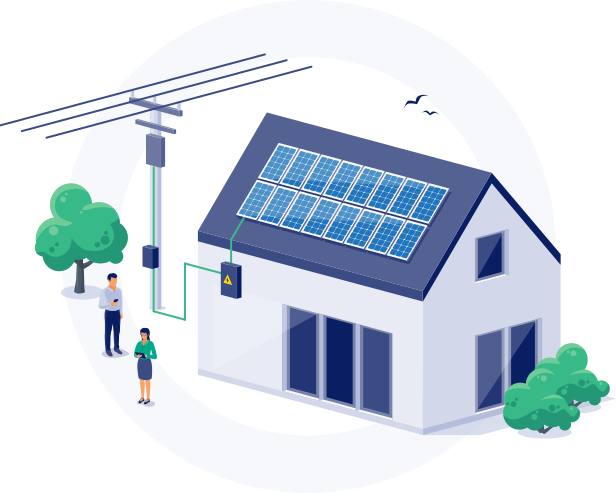
In engineering, “grid” means the electricity network. Systems that operate connected to the grid are called On Grid systems. They are built so that the electricity generated by grid-tied solar panels is consumed the instant it is produced, at the point where it is produced, without being stored, and so that the surplus is fed back into the grid.
On Grid solar energy systems can be large-scale ground-mount or rooftop installations, or micro solar plants sized to cover the electricity needs of an individual home.
Solar systems of this kind are used for residential consumption and for high-capacity power plants. The electricity produced by the solar panels is delivered to the grid through high-conversion-efficiency inverters connected to the central municipal network. The aim is both to lower your bills with the electricity produced on your roof and to earn a return — however modest — from the surplus.
Electricity generation from natural resources is growing rapidly worldwide to meet rising air pollution and energy demand. The answer to growing energy demand in every sector runs through renewable resources. Governments and government-backed institutions offer solar incentives for building solar power plants, establishing solar farms and generating energy.
In this system, storage is handled by the municipal grid the installation is connected to. The direct current (DC) electricity produced by the solar panel is converted into alternating current (AC) by the On Grid inverter. Thanks to their MPPT capability, On Grid inverters achieve high conversion efficiency. The electricity generated is used first by the electrical loads at the installation site. Whatever is left over is sent to the municipal grid through a bidirectional meter. On Grid solar energy systems use monthly net metering, and surplus electricity can be sold. MPPT (Maximum Power Point Tracking): a technique used so that the electricity generated by the solar panel charges the batteries more efficiently.
Advantages of Grid-Connected (On Grid) Solar Energy Systems
Beyond the financial advantages they bring investors, they deliver major benefits such as a lower environmental impact and energy independence, letting them contribute to a sustainable energy future.
- Savings on Your Energy Bill
With a solar energy system, part or all of a home or business’s electricity demand can be met by the solar panels. That translates into significant savings on energy bills. - Earning an Income
Surplus electricity can be sold to the grid, generating income. By selling the excess energy you produce to the grid, you receive payment from the utility. Since solar panels have an expected service life of 25 years, the system turns its cost into profit within a few years and becomes a long-term investment. - Flexibility
Because the system can be sized to the space and capacity you want, it is inherently flexible. Where there is enough space, the installed capacity can be increased by adding new panels. - Environmental Responsibility and a Green Image
Solar is a clean, environmentally friendly energy source. Using this system, you can reduce your carbon footprint and contribute to environmental sustainability. Using green energy also builds an environmentally responsible image. - Energy Independence and Security
A solar energy system lets you meet part or all of your own electricity demand and reach energy independence. At the same time, staying connected to the grid keeps your supply secure. - Increased Property Value
Installing a solar energy system raises the value of your home or business. Solar energy systems are seen as a valuable investment in energy efficiency and environmental sustainability. - Access to Government Incentives and Rebates
Governments periodically offer incentives and rebates to encourage the use of solar energy. Taking advantage of them, you can install solar energy systems at a lower cost. - Social Responsibility and Contribution
Using solar energy reduces dependence on fossil fuels and lets you meet your social responsibility as an environmentally conscious energy user.
Where Grid-Connected (On Grid) Solar Energy Systems Are Used
Solar is the fastest-growing renewable energy source in the world today. Its low cost, the ease with which it can be deployed and the speed at which the money invested comes back as return are what make it the preferred choice.
- Homes on mains electricity
- Hotels and aparthotels
- Solar power plants
- Organized industrial zones and urban businesses and factories
- Farms
- Cold storage facilities
- Agricultural irrigation
- Shopping centers

Let Us Design
the System That Suits You Best
Fill in the request form to get support from our energy engineers.

Our engineers will contact you on 0(553) 532 9768 or 0(531) 011 4767. During the call they may ask you technical questions and request your full address for a detailed site survey.