How Does It Work?
Discover the Journey of Sunlight Turning into Electricity
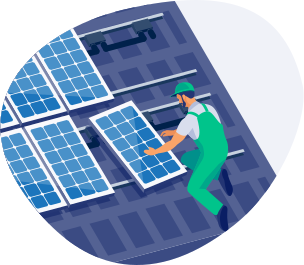

PhotoVoltaic
The rays (photons) arriving from the sun transfer the energy they carry to the electrons inside solar cells made of silicon.
Electrons moving inside solar panels designed on the magnet principle create a voltage, and with it electrical energy.
Read On
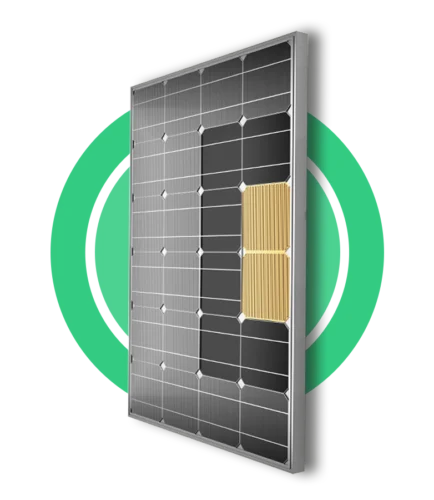

Generation
Solar panels with a high silicon content absorb energy in the form of light and turn it into the electricity we use in daily life.

Transmission
The electricity the panels generate is carried to the inverter by copper-conductor solar cables built to withstand harsh outdoor conditions. The inverter is the playmaker of the system.

Conversion
The inverter converts the direct current (DC) generated in the panels into alternating current (AC) so our appliances can use it, and distributes it through the cabling.

Consumption
If the instantaneous consumption in your home exceeds the panels' generation and the energy in the batteries, power is drawn from the grid. When generation is higher, it is stored in the batteries or can be sold to the grid.
Teknik Grafikler ve Sistem Verileri
Electricity Generation Across 4 Seasons
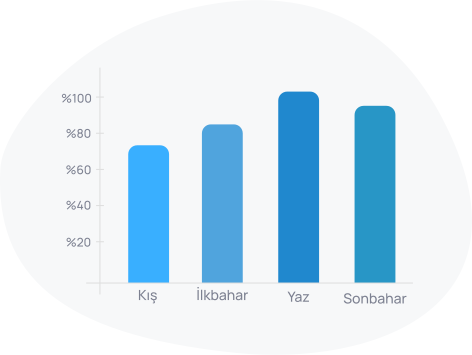
Solar energy systems can generate electricity in every seasonal condition and throughout daylight hours.
Investment Payback Period
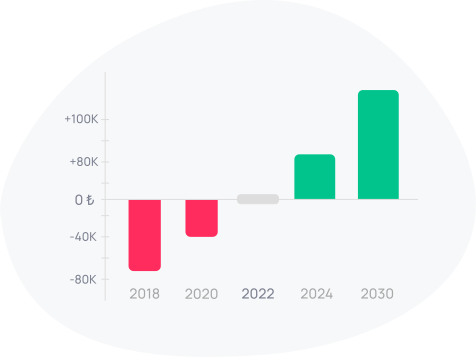
When you plan your energy consumption correctly and during daylight hours, the system's payback period is calculated at between 4 and 6 years.
Get in Touch
for More Detail

Meet the energy engineers who will manage your switch to solar energy in the most professional and seamless way.
+90 232 433 09 35